
Modern Fiction

In this class, we explored the science fiction genre, Afro and African Futurism. We looked at the nature of identity, destiny, and female agency through the lens of the African Diaspora and African heritage. The texts for this class, include: multiple short stories, a Star Trek: Deep Space Nine episode, Black Panther, Parable of the Sower by Octavia Butler, Noor by Nnedi Okorafor, and Orleans by Sherri L. Smith.
Modern Fiction
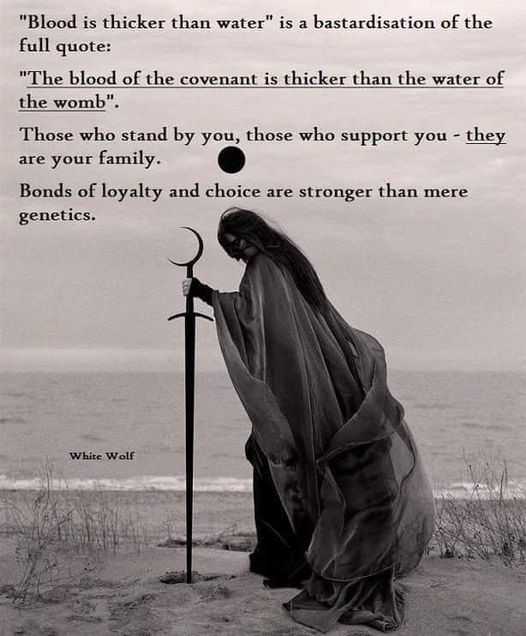
In this course, we look at the notion of found or self-created family. The old saying, “blood is thicker than water” (a bastardization of the real quote) no longer holds true as more than 50% of families are considered blended families. In life as in literature, we see that family is not always about blood but the bonds we make with others. We will specifically look at this theme in speculative fiction. We’ll closely examine 7 texts (texts include written and visual material) and explore what makes family, family. Texts: Motherlines by Charnas, He, She and It by Piercy, A Long Way to a Small Angry Planet by Chambers, The House In the Cerulean Sea by Klune, and three visual texts: Firefly, “Out of Gas,” The Last of Us, “Long, Long, Time,” and Guardians of the Galaxy.
Modern Fiction
Texts: Level 7 by Mordecai Roshwald, The Year of the Flood by Margaret Atwood, The Road by Cormec McCarthy, Parable of the Sower by Octavia Butler, and The Girl with All the Gifts by M.R. Carey.
Women, Gender, and Sexuality
In this course, we will look at the evolving notions of gender and sexuality through the lens of speculative and fantasy literature. Speculative and fantasy fiction are excellent vehicles for studying the many nuances of gender and sexuality, for it allows for “utopian thought” experimentation and “cognitive estrangement” by letting us discuss familiar ideas within unfamiliar times and places. We will explore womanhood, gender, and sexuality through a wide range of authors and texts: Beginning with some battle of the sexes and 19th century feminist utopian writings, hitting the second-wave feminist sf, and into contemporary transgender and queer fantasy.
Literature and Other Media:
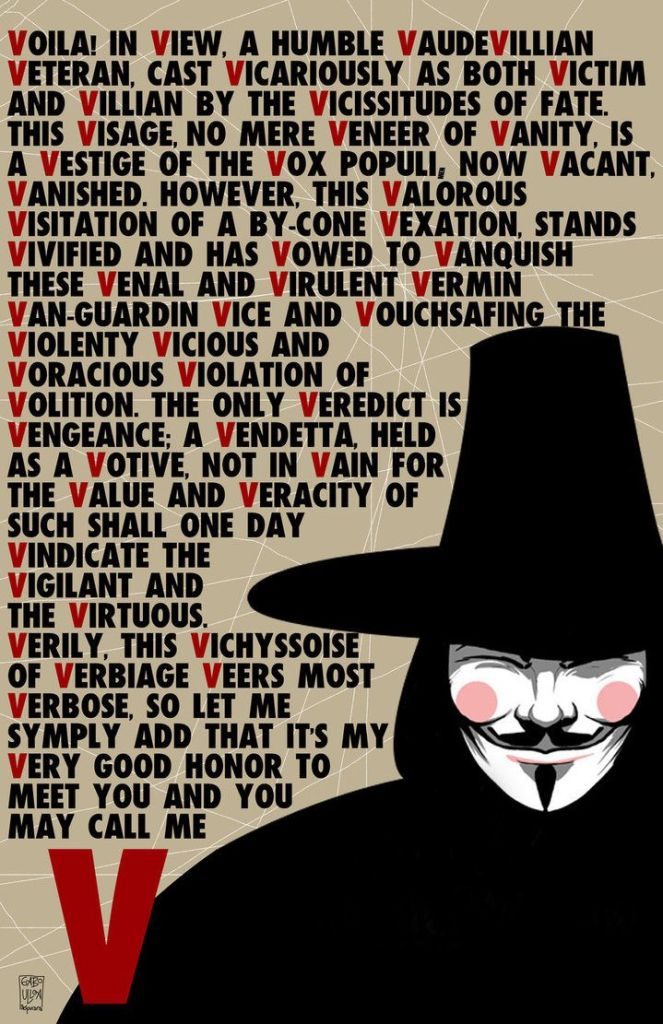
Imagine the world you live in was suddenly destroyed by disease or war or natural disaster and a new world had to be created. Would it be paradise, with no poverty, disease, or war—utopia? Or would it disintegrate into totalitarian regimes that stripped you of your rights one by one until you were a prisoner in your own country—dystopia—like in The Hunger Games? Authors have been imagining new futures, both utopian and dystopian, for hundreds of years. This trend has become increasingly popular with young adult dystopian literature (The Hunger Games, Divergent). In this course we will explore the foundational elements of a utopia and then the distortion of those elements which creates a dystopia. To understand the universality and consistence of these ideas, we will trace these elements across eras, countries, and genders. As utopian and dystopian literature comments on social and political issues of an author’s time and place, we will focus a critical eye to the cultural, historical, and political contexts and explore the continued popularity of these themes. We will do this by examining classic, science-fiction, and modern dystopias in literature such as the novels The Day of the Triffids by John Wyndham, Fahrenheit 451 by Ray Bradbury, The Handmaid’s Tale by Margaret Atwood, WE by Yevgeny Zemyatin, and the graphic novel V for Vendetta, as well as short stories, and the movie Serenity.
Literature and Other Media:
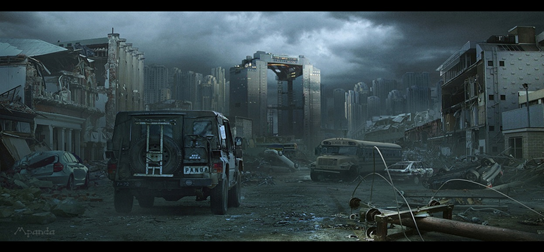
For hundreds of years, authors have tried to imagine what the future would look like based upon present contexts; unfortunately, these futures are rarely improved from present society; in fact, in many, the world has gone up in flames or mutated beings wander the earth. In this course, we will look at some of the most iconic futures imagined by authors. First, we will look at the foundational elements of dystopian and post-apocalyptic worlds. Then, through the texts, we will use the lens of the hopes and fears that are woven throughout to examine the societal fears (of the real world) of government, technology, and medicine which prompted the author to envision new societies or destroyed societies. First, we will form a groundwork of dystopian and apocalyptic themes. We will then examine these themes in seminal works: The Time Machine by H.G. Wells, 1984 by George Orwell, I Am Legend by Richard Matheson; the graphic novel The Walking Dead, Vol 1; multiple short stories, “The Machine Stops,” and “The Future Doesn’t Need Us.” We will compare and contrast three currently airing television shows which show three different futures: Revolution/The Walking Dead/Almost Human. Finally, we will take a break, sort of, at midterm and finals and watch the movies The Time Machine (2001) and The Book of Eli.
Thematic Approaches to Literature
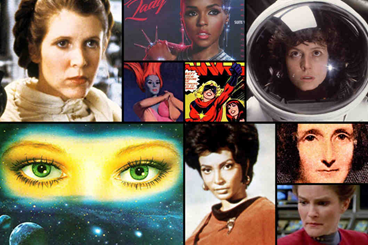
For much of its history, Science Fiction has been perceived as a pulp genre and only recently garnering the attention it deserves. It is only in recent years that science fiction has gained a voice in academic circles, yet it is a genre rich in social, cultural, and historical contexts and often ripe with controversial discussions of complex and various ideologies. Female authors of science fiction are even less known than their male counterparts. In this course we will postulate why science fiction is not often studied in academic circles and why it should be, and specifically why female writers of such have a difficult time carving out their own niche, yet are worthy of discussion and study. We will continue to examine what female writers bring to the genre and the historical contexts and present relevance of female authored science fiction texts. This will focus on short stories, utilizing the anthologies Daughters of Earth: Feminist Science Fiction in the Twentieth Century and Feminist Philosophy and Science Fiction: Utopians and Dystopias, as well as various short stories posted on the class page.
Freshmen Writing

Writing about Culture
In these classes, I teach both the basics of writing and advanced basics (Freshman English pts 1 & 2). In these classes, students learn primarily about argumentative writing. I teach basic computer skills that connect to writing, grammar, syntax and sentence structure, summaries and responses, and all the components of writing a strong argument paper. This includes introductions, body paragraphs with topic and transition sentences, and conclusions. In the second sections of Freshmen writing, we discuss writing within a cultural framework. I use Globalization: A Reader for Writers which, though a bit dated, really encourage students to think about the concept of globalization and all the negatives and positives of it. Texts: Everything’s an Argument, They Say/I Say, and Globalization: A Reader for Writers.
 Dr. Sarah M. Gawronski